The second Benjamin Lay Lecture—The Collective Reparations Responsibility, given by Rashaun Williams on February 2, 2025—was a conversation and workshop on how different communities can play their parts in reparative justice to Black Americans whose ancestors endured chattel slavery in the United States.
By Rashaun Williams
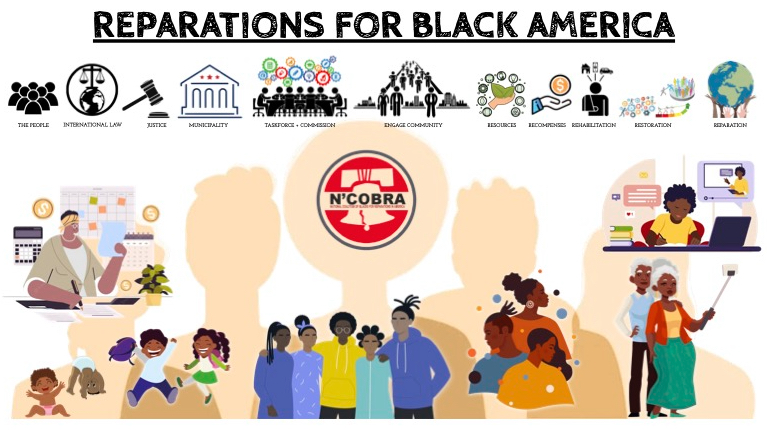
About N’COBRA PHL
The Philadelphia Reparations Task Force has been organized by N’COBRA PHL, and introduced to Philadelphia’s City Council by Councilmembers Jamie Gauthier (3rd District) and Kendra Brooks (At-Large) via Resolution No. 23053200 with unanimous approval on June 22nd, 2023.
Founded in 1995, N’COBRA PHL is the Philadelphia Chapter of the National Coalition of Blacks for Reparations in America. N’COBRA is the premiere mass-based coalition of organizations and individuals organized for the sole purpose of obtaining reparations for African descendants in the United States, founded on September 26, 1987.
N’COBRA acknowledges five injury areas from the institution of slavery and its vestiges:
- Education
- Poverty
- Health
- Criminal Punishment and Political Prisoners
- Peoplehood/Nationhood
Since 2020, N’COBRA PHL has advanced the need to enforce Philadelphia’s Slavery Disclosure Ordinance, hosted and participated in numerous conferences and conventions across the country and world, and co-authored the Philadelphia Reparations Task Force resolution to advance the reparations movement.
Why Reparations for Black America?
(Crimes Against Humanity)
- Pseudoscientific subordination to civility, humanity and society
- International kidnapping and global human trafficking
- Physical torture and corporeal exploitation
- Bondage, sadism and masochism
- Religious manipulation, spiritual duress, and iconoclasm
- Racial antagonization and ethnic appropriation
- Psychological torment, cognitive paralyzation and cerebral traumatization
- Defamation of character to peoplehood and identity theft
- Standardized eugenics, sterilization, and genocide
- Compulsory and coercive medical malpractice
- Illegal and unlawful seizure and destruction of land and property
- Asset annihilation and capital bankruptcy
- Economic repression and financial depression
- Governmentally enforced dislodgement and displacement
- Environmental toxification and degradation
Why Reparations for Black America?
(Constitutional & Civil Rights)
- Opiating and inebriation
- Accredited miseducation and authorized misinformation
- Endorsed racism and municipally sponsored prejudice
- Exonerated lynchings and absolved massacres
- Overt vilification and unjust criminalization
- Corrupt policing and mass incarceration
- Excessive convictions and exaggerated sentencing
- Social inequality and justified incivility
- Violation of 4th Amendment right pertaining to illegal and unlawful search and seizure
- Violation of 5th Amendment right of private property not taken for public use without just compensation
- Violation of 6th Amendment right of judgment by impartial juries
- Violation of 8th Amendment right of non-excessive bails and infliction of cruel and unusual punishments
- Violation of 8th Amendment right of non-excessive bails and inflictions of cruel and unusual punishments
- Violation of 14th Amendment rights, sections 1 & 2, for no creation and enforcement of laws to abridge the rights of naturalized citizens of the United States, deprivation of life, liberty, and property without due process of law, and unequal protections of the laws
- Violation of their 15th Amendment right to vote for 94 years
Why Reparations for Black America?
(State-Sanctioned Terrorism & Violence)
- Papal Bull of 1455 / Doctrine of Discovery of 1492
- Casual Killing Act of 1669
- Negro Act of 1740
- Fugitive Slave Act of 1793
- Missouri Compromise of 1820
- Freedmen’s Bureau Act of 1865
- Black codes of 1865
- Convict Leasing of 1866
- Berlin Conference of 1884
- Sterilization Acts from 1907 to 1970
- Compulsory Education Act of 1922
- Racial Integrity Act of 1924
- Servicemen’s Readjustment Act of 1944
- Highway Act of 1956
- Jim Crow Laws until 1964
- Suffrage until 1964
Philadelphia’s Slavery Disclosure Ordinance
Amending Section 17-104 entitled “Prerequisites to the Execution of City Contracts” by adding a new subsection (2) entitled “Slavery Era Business/Corporate Insurance Disclosure” to promote full and accurate disclosure to the public about any slavery policies sold by any companies or profits from slavery by other industries (or their predecessors) who are doing business with the City of Philadelphia and recodifying Section 17-104 by incorporating various technical changes; all under certain terms and conditions.
Amending Section 17-104 of The Philadelphia Code, entitled “Prerequisites to the Execution of City Contracts,” by requiring any City Depository authorized to accept City deposits under Section 19-201 of The Philadelphia Code to annually certify compliance with Section 17-104 and, if such depository has disclosed slavery policies sold by it or its profits from slavery, to provide the City with a statement of financial reparations; all under certain terms and conditions.
Financial depositories who have sold slavery policies or made profits from slavery must provide:
- A description of any new financial products or programs to address racial disparity in its lending and investment activities
- Affidavits certifying that neither it, nor any of its affiliates, are or will become high-cost lenders or predatory lenders
- An annual statement of community reinvestment goals including the number of small-business loans, home mortgages, home-improvement loans, and community development investments to be made within low- and moderate-income neighborhoods
- A long-term strategic plan to address disparities in its lending and investment activities, addressing how the depository will match or exceed peer lending performance in targeting capital access and credit needs disclosed in disparity studies.
Call to Action for the Quaker Community
- Trace ties to the Dutch West India Company and other Dutch/German slave-trading activities, including Sweden and the countries of the region participatory in the slave trade.
(Westindische Compagnie, 1624-1791) - Account for all of the Pennsylvania-based Dutch/German organizations existing today and properties owned through the development of the New Netherland and New Sweden colonial period in America. (New Netherland, 1614-1667 — New Sweden, 1638-1655)
- Participate in reparations and liaise the correspondence between the Dutch, U.S., and Caribbean. This should include correspondence, diplomacy, and advocacy among other Europeans participating in the slave trade as well. (Dutch Apologized for Slavery in 2022)
Building With Reparations Leaders
- Work with Rep 215 to learn more about how to push for PHL reparations policy enactment and enforcement, continuing to participate in workshops, offer resources, and lobby for reparations.
- Uncover truths and share them with Quaker community and reparations partners on how the Quakers can engage community members, government, philanthropy, businesses, academia, religious institutions, global partners, e.t.c. for reparations.
- Host public conversations and reparations screenings like “Reparations” by Jon Osaki in public spaces (i.e. libraries, community centers, auditoriums, e.t.c.) to build awareness, engagement, and solidarity.
- Publish a non partisan Letter of Support for Reparations with multiple institutional and individual signatories for your regional district.
- Participate in testimony sharing opportunities like press conferences, hearings, interviews and more to add value to the visible solidarity for Black reparations.
Support In Action: An Example of Allyship
JACL Philadelphia Supports Creation of Philadelphia Reparations Task Force
The Japanese American Citizens League is the oldest and largest Asian American civil rights organization, founded in 1929 by U.S. born children of Japanese immigrants. Our local chapter, JACL Philadelphia, was established in 1947 by Japanese Americans who resettled in Philadelphia after experiencing their forced West Coast eviction, forfeiture of their property, and incarceration in American mass concentration camps during WWII.
JACL Philadelphia unequivocally supports the National Coalition of Blacks for Reparations in America Philadelphia Chapter in their efforts to establish a Reparations Task Force in the City of Philadelphia.
Japanese Americans are no strangers to racism in this country. Our Japanese grandparents and great grandparents who immigrated to the United States in the early 20th century, was during a time when the KKK was actively lynching Asian immigrants in the West Coast. Beginning in 1790, Japanese immigrants along with other immigrants from Asian countries were denied the right to vote because they were barred from becoming U.S. citizens. Further, Japanese were prohibited from purchasing land after 1913, and were restricted from conventional bank loans.
In 1963, members of JACL and members of the National JACL Board accepted the invitation of the NAACP, and marched in the civil rights march on Washington, DC. Since then, national progress toward civil rights and reparations for Black Americans has fallen ashamedly short of otherwise well intentions. It is hard to imagine Japanese American history in America written with anything as bad as the experiences of Black history in America. Now is the time for the Japanese American Citizenship League of Philadelphia to stand in alliance with Black Americans to advocate for reparations.
It was only through the friendship, solidarity, and allyship with African American civil rights leaders that Japanese Americans and other Asian American communities gained the right to become naturalized citizens (1952 McCarran-Walter Act), the right to freely migrate between US and Asia (1965 Hart-Celler Act), and countless other hard-won legal victories championed by Black activist leaders.
Japanese Americans are one of the few communities who have received reparations from the United States government as a result of the Civil Liberties Act of 1988, signed by President Ronald Reagan. Also known as the Redress Movement, this was a long and hard fight for more than twenty years as Japanese Americans and our allied communities fought in the halls of Congress, and across the country in city council chambers and in grassroots community spaces. Throughout this process, African Americans and elected officials were among our most vocal supporters. In particular the Congressional Black Caucus led by Representative Ron Dellums (D-CA) demonstrated their allyship on the floor of Congress. Speaking in support of Redress, Dellums a native of Oakland California, recounted a childhood memory of his Japanese American friend being led away by armed US soldiers. His powerful act of kindness and solidarity is not, and will not be forgotten.
In support of Black Reparations, JACL Philadelphia recently joined over 75 other Japanese American progressive organizations across the country as members of the National Nikkei Reparations Coalition. We raise our voice in chorus with N’COBRA PHL demanding that the City of Philadelphia establish a Reparations Task Force.
Speaking as a community who has deservedly attained our own redress, we do not believe that any amount of reparations is capable of erasing the harm, pain, or trauma that persists for generations as a result of the enslavement of Africans, Jim Crow and other prejudicial regulation, disproportionate policing, and the many further inequities that African Americans continue to endure. Moreover, redress in the form of reparations will open a space for meaningful conversation and healing, as has occurred in communities of Japanese Americans.
To quote James Baldwin, “Not everything that is faced can be changed, but nothing can be changed until it is faced.” In order for our country to truly heal from the foundational sins of African slavery, Indigenous genocide, and institutional white supremacy, JACL Philadelphia believes it is necessary to face this particular issue head on by establishing a Philadelphia Reparations Task Force.
Identify Stakeholders
Here are some ways to identify the stakeholders you should acquire to support Black Reparations.
- Government / Public Officials
- Law & Legal Experts
- Public Health & Safety
- S.T.E.M.
- Heritage & Humanities
- Child Care & Development
- Human Services
- News, Media, Information
- Academic
- Philanthropy & Charity
- Environment Ecology
- Agriculture & Farming
- Business & Development
About Rashaun Williams

Rashaun Roy Williams, aka, DJ Reezey, is an altruist who builds systems for humanities, human rights and human ecology. He co-founded Phresh Philly in 2011 to advocate for clean, healthy, and green neighborhoods in Philadelphia, and directed OIC of America’s FLASH Initiative in 2011 to expand career education, internships, and entrepreneurship opportunities for high school students across the City of Philadelphia. In 2013, he was awarded the Black Male Engagement Award by the Knight Foundation and began co-creating national programs with Black male innovators, leaders, and public servants from communities across the United States.
About Sarah and Benjamin Lay
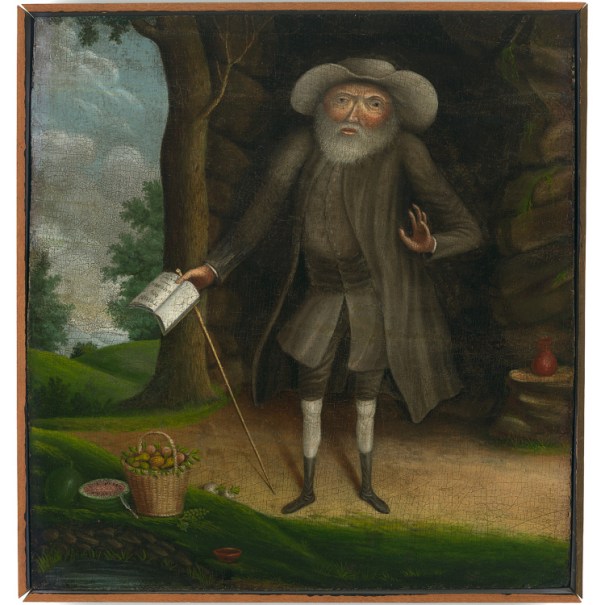
Benjamin and Sarah Lay were Quakers from England who moved to Barbados about 300 years ago, an island that then had about 9000 Europeans and more than 70,000 enslaved Africans. In 1718, most Quakers were no different than the other whites on Barbados. What Sarah and Benjamin saw in Barbados changed them forever. From Benjamin’s book:
“My dear wife has often spoke of a passage . . . in Barbados, [and] going hastily into a very plain-coat-outside Friend’s house. There hung up a Negro stark naked, trembling and shivering, with such a flood of blood under him, that so surprised the little woman she could scarce contain [herself]. But at last a little recovering, she says to some in the family, “What’s here to do?” They began exclaiming against the poor, miserable creature for absconding a day or two—maybe by reason of his cruel usage, as by this barbarity we may imagine.”
Benjamin called Sarah “the little woman” and himself “little Benjamin” because they were both about 4 feet tall. They devoted the rest of their lives to the ministry of denouncing slavery, and trying to convince the members of their Quaker community that God required them to free the enslaved and to make amends.
Sarah died in 1735. In 1738, slaveholding leaders succeeded in having Abington Meeting disown Benjamin, excluding him from the monthly meetings for church business. He continued attending worship here and laboring to convince hearts of God’s Truth. His book, All Slave-Keepers That Keep the Innocent in Bondage: Apostates, has a quote on the title page from Isaiah: “The leaders of the people cause them to err.” Twenty years later, the Philadelphia Yearly Meeting of Friends finally took the first big step toward abolishing slave trading among its members. And the next year, Benjamin died. In his will, he left Abington Meeting and its school 40 pounds “to be applied towards the education of poor children belonging to the said society.”
The purpose of this Benjamin Lay Lecture is not to talk more about Benjamin Lay, but to raise a topic that he would have cheered—the cause of justice and reparations.
Follow My Blog
Get new content delivered directly to your inbox.
 BENJAMIN LAY